
In real estate, we often use the word far to describe the distance of our property from a landmark. However, if you’re someone planning to buy a piece of land and have a building constructed on it, you may have heard of the term ‘FAR’. It stands for Floor Area Ratio. What does it really mean, and why does it matter? How much awareness about FAR real estate enthusiasts are supposed to have? If these questions are looming in your mind, this blog is for you!
FAR is a ratio of the usable space in the building to the size of the plot it sits on. In other words, FAR area means how much total floor space you can build on a piece of land. It’s a key metric for zoning regulations that helps control how much and what type of construction is permissible in a particular area. Therefore, it can help plan cities better as they grow. Read on to learn more about FAR, its importance and how to calculate it. Discover the factors that influence its value, the pros and cons.
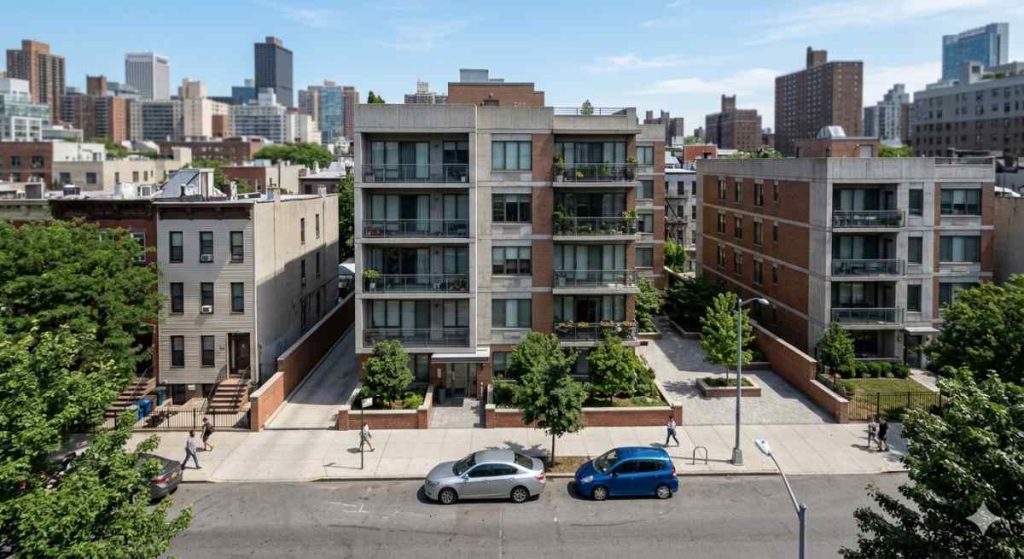
In real estate, FAR is a rule that indicates how much usable space or floor space you can build on a plot. The FAR ratio is obtained by dividing the total build-up area by the total land area. Looking at the interpretation of what is FAR in real estate context, the value of FAR permitted by the authorities is key to deciding the maximum allowable building density on a plot. A higher FAR value means more construction is allowed. On the contrary, a lower FAR means the plot is ideal for limited construction.
Understanding this FAR meaning in real estate is crucial as it influences the project’s feasibility, building density and property valuation. Moreover, it guides compliance and helps stakeholders assess the economic viability of the project.
FAR calculation is important when planning a real estate project, especially in its early stages. If you’re wondering how to calculate FAR, the formula is simple:
FAR = Total Built-up Area ÷ Total Plot Area
It gives you the value of the floor area ratio. The value of the FAR ratio real estate project stakeholders calculate in this way helps them determine building density and the viability of the project. Below is a simple FAR calculation example for a better understanding:
Suppose the plot area is 5,000 sq. ft. and you have 3 floors of 2,500 sq. ft. each, then,
The permitted value of FAR real estate authorities establish helps stakeholders in deciding the maximum floor space they can build on a piece of land. That means, builders can use the FAR value to calculate the permitted maximum built-up area on a total plot area using the equation:
Maximum built-up area = Plot Area X FAR
While FAR stands for the ratio of total built-up area to total plot area, not every part of a building is included in the calculation. Building rules set by the local authority decide what is counted and what is not.
Factors included in FAR calculation:
Exclusions from the FAR ratio:
The terms FAR, FSI and FSR can be confusing. They are:
Basically, they mean the same thing. All three refer to the ratio between the total built-up area and the total plot area. As such, the formula for calculation and the purpose are the same for all. However, minor differences exist. The key difference between floor area ratio and floor space index is mainly in the expression of the value and the terminology used in different regions.
Meanwhile, FSR is used interchangeably with these terms. All three values measure the allowable total floor area across all floors of the building relative to the plot size.
When considering what is floor area ratio good for, it controls how much construction is allowed on a piece of land. It influences building size and density and project value. Therefore, when it comes to real estate projects, knowing the importance of floor area ratio helps buyers and developers make smart decisions.
FAR shows the maximum construction permissible on the plot. It helps buyers understand how dense a property may be and analyse its future potential. FAR real estate calculation and regulations can:
You may wonder what is FAR in construction or property development contexts. Realtors or builders do not just purchase acres of land and build residential or commercial buildings on it. It takes a lot of planning, calculations and assessment. Along with geographical factors, FAR rules and zonal regulations matter for deciding what kind of construction is allowable on a piece of land.
And that’s not all! FAR helps developers decide the feasibility and scale of the project. It also plays a key role in planning, design choices and construction methods, such as modular construction. Knowing the importance of floor area ratio or FAR in construction is hence crucial for realtors or developers. It helps them with:
FAR real estate calculations are significant in planning cities and managing infrastructure. FAR value helps control how urban areas grow, how crowded they become and whether the infrastructure is sufficient to handle the population. Therefore, proper FAR regulations are key to safe, balanced and sustainable urban development. FAR helps with urban development in the following ways:

FAR has a direct impact on property value. It influences how much construction is allowable on a plot. In turn, it affects supply, demand, and long-term appreciation. Buyers and investors often look at FAR before making a decision.
FAR can impact property values directly. The ratio affects how much construction is allowed on a plot. Accordingly, the construction can be a high-rise or low-rise building. As such, FAR influences supply, demand and long-term appreciation. Buyers and investors often consider FAR before making decisions related to a property.
A higher FAR permits more or denser construction on a plot of land. It typically implies taller or high-rise constructions with a large number of units. As such, a higher FAR can:
A lower FAR in real estate limits the amount of construction. It can lead to low-rise constructions or fewer, smaller and less dense units like villas or independent houses. As a result, lower FAR results in fewer floors and more open space. It can:
The value of the FAR floor area ratio affects the type of real estate property. Residential and commercial properties are different. Primarily, residential is meant for people to live in, while commercial is for businesses to operate.
In residential real estate, FAR is usually low or moderate. This prevents overcrowding and helps maintain optimal light, ventilation and open spaces. Moreover, it ensures better living conditions, whether you choose a ground-floor or top-floor apartment. Besides, a lower FAR in residential projects supports balanced community planning.
The value of FAR in commercial real estate is often higher, especially in business zones. It allows for more office or retail spaces on a plot. As such, it supports higher economic activity and better use of land. Commercial zones are usually capable of handling higher density and traffic.
The value that FAR real estate local regulations establish is not a fixed one. It can vary, and several factors influence the FAR value. Location, local rules and the project type, to name a few. These factors ensure that construction is safe, balanced and well-planned.
Sometimes, developers pay a fee to increase the buildable area beyond the permitted FAR. It is a premium floor area ratio approved by local authorities. Premium FAR is helpful in infrastructure upgrades and allows for higher-density buildings in designated locations.
One of the key advantages of floor area ratio in high FAR areas is better utilisation of land and support for urban growth. However, there are some downsides to a higher FAR as well. Below are the advantages and disadvantages of high FAR you should know.
Advantages of High FAR:
Assessing floor area ratio correctly is crucial in real estate decision-making. Improper evaluation can lead you to the wrong choices and put your investment at risk. Here are the common mistakes to avoid when considering FAR in real estate:
Knowing the FAR real estate rules and calculations is key before investing in a property. It helps you know how much built-up space is permissible on a plot. Moreover, floor area ratio affects the building’s density, type, living experience and your returns. Assessing it properly helps you make smart and safe investment decisions in real estate assets. Check the local rules and take the help of real estate experts for proper guidance.
Partner with a trusted developer like Confident Group to invest in the right project. We help you discover properties that excel in quality, safety, compliance and long-term value.
1. Can FAR change over time?
Yes, the government can change FAR rules over time based on city plans and urban growth or development needs.
2. What does 1.0 FAR mean?
A FAR value of 1 means that you can build a total floor area equal to the total plot size.
3. What does a 1.25 FAR mean?
A FAR value of 1.25 means you are allowed to build 1.25 times the plot size. For instance, if you have a 1,000 sq. ft. plot, a total built-up area of 1,250 sq. ft. is permissible.
4. What is the difference between FAR and FSI?
FAR and FSI mean the same thing: the ratio of total allowed built-up area to the total plot area. FAR is often expressed as a decimal, while FSI is a percentage.
5. How to calculate FAR in land?
FAR is calculated using the formula FAR = Total Built-up Area ÷ Total Plot Area.
6. Is staircase included in FAR?
Yes, staircases are mostly included in FAR calculation, though it may vary in some regions based on local rules.
7. Is a balcony included in FAR?
Open balconies are not included in the FAR calculation in most regions. Exceptions may apply if the balcony is enclosed to become a habitable space. Checking the local rules is important.


Buying a new flat or apartment is a big life decision. Despite the excitement, many people feel perplexed about how to buy a flat without making mistakes. Legalities, property value growth a...

Homebuying is a big decision. Finding the right property in the right location is key. If you are looking for places adorned by natural beauty, fast growth and investment potential, Kerala h...



Comments