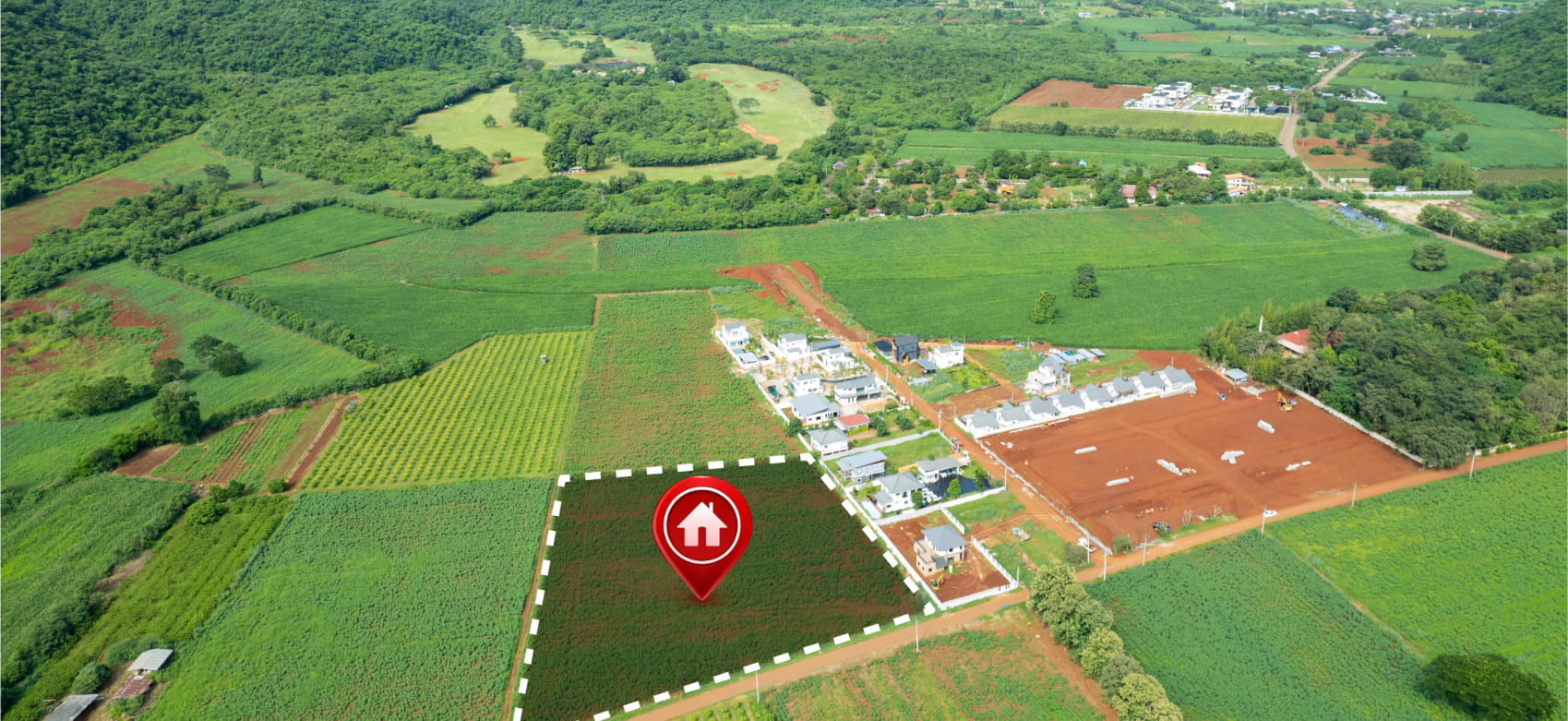
Have you ever wondered how cities grow in terms of infrastructure? Roads expand, metro lines emerge, and new buildings spring up every year- urbanisation keeps happening! But land in cities and urban areas is premium and limited. So how does this rapid growth continue to happen? That’s where TDR in real estate makes all the difference! It is short for Transferable Development Rights.
Read on to learn what is TDR in real estate useful for and why it is important. Discover how TDR benefits developers and land owners. Learn about its types and advantages.

TDR allow landowners to transfer the right to build from one plot to another. As TDR full form in real estate implies, it is a system that facilitates the transfer of development rights from one location to another. This becomes useful for city planning. Here’s how it works:
TDR helps the government to develop public projects without paying a lump sum to property owners. They can acquire land for public projects while giving the property owners development rights, which they can use or sell elsewhere. So, what is transferable development rights good for? In simple words, it’s a great tool for urban planning that helps manage land use and supports city growth.
TDR in real estate plays a key role in urban development. It supports better planning and infrastructure growth in cities. On one hand, it helps developers gain additional FSI or the building potential in a designated area. On the other hand, it protects the rights of landowners and helps conserve special properties.
TDR helps the government acquire land for public projects. TDR rules in real estate aim to promote efficient land use and well-planned construction while safeguarding the rights of all parties involved.
Transferable Development Rights provides landowners with a form of compensation when land is acquired for public use. It allows landowners to monetise the unused building potential (FAR or FSI) of their property. This is particularly beneficial for land that belongs to restricted, reserved or heritage zones.
Using TDR, the owner can sell the building rights to developers in high-density areas. This offers a sort of financial compensation without requiring cash payouts from the government. Here’s how TDR may be beneficial for landowners:
TDR in real estate offers flexibility in planning and supports infrastructure growth. It allows developers to increase the building potential without buying more land, especially in cities where land is premium. TDR helps developers in the following ways:
While a TDR purchase allows developers to build over the base FSI limits, the project still has to comply with several rules and regulations. These include, but are not limited to, approved building plans and NOCs. Authorities verify these before issuing a Completion Certificate (CC).

The TDR system allows for the transfer of development rights from one area to another. It helps cities manage land use while supporting public projects. When considering how does TDR work in real estate projects, a typical sequence of proceedings includes:
If you’re curious about the working of the TDR in real estate system, knowing some basic concepts can help. These terms are typically used in property development and city planning.

In real estate, the TDR type varies based on the purpose of land acquisition and conservation. The different types of Transferable Development Rights help the local authorities support public projects, conserve and protect important areas. Moreover, they essentially support a well-planned urban growth.
Below are the key types of TDR:
The system of TDR in real estate projects usually involves the following steps:
TDR, FSI, and FAR are important concepts in real estate that define development rights and construction limits on a property. FSI and FAR refer to the same concept. They both measure the maximum built-up area allowed on a plot. But the term used may vary by region or authority. Below is a differentiation of these three terms for a clear understanding:
| Aspect | TDR | FSI | FAR |
|---|---|---|---|
| Meaning | Transferable Development Rights is a certificate or development value that can be used or sold for additional construction | Floor Space Index that defines the maximum buildable area on a plot | Floor Area Ratio that also defines the permitted building area relative to plot size |
| Purpose | Allows transfer of development rights from one property to another | Controls how much construction is allowed on a plot | Used in planning rules to regulate building density |
| Usage | Helps increase construction potential beyond the base FSI limit | Determines the base construction limit | An alternative term used in many regions for FSI |
| Nature | A transferable development right | Planning regulation | Planning regulation |
TDR facilitates better city planning and infrastructure development. It benefits landowners, property developers and local authorities. The key advantage TDR in real estate sector is the way it balances urban growth and the protection of land that has to be preserved. It protects the interests and rights of both landowners and developers.
Here are the major advantages of TDR you should know:

The TDR value depends on the development potential of the land surrendered for public use. The planning rules set by local authorities also matter. The calculation of Transferable Development Rights TDR considers the land’s size and permissible construction density in that area. The result of the calculation is issued as a Development Right Certificate (DRC). It represents the amount of built-up area that the landowner can use, transfer or sell.
Here are the basic considerations involved in TDR calculation:
Example: If a landowner agrees to give 1,200 sq. m. of land for a public park and the allowed FSI is 1.5, the TDR generated will be 1,800 sq. m. of buildable area. This development right can then be used on another property or sold to a developer in a receiving zone.
As land prices vary from location to location, the usable TDR is adjusted to ensure a fair value. So, usable TDR in real estate indicates how much of the generated TDR (from the sending area) can actually be used on another plot (the receiving area). Developers calculate it using the formula:
TDR (Utilisable) = (Price of generating area ÷ Price of receiving area) × TDR generated
Here,
This adjustment prevents developers from gaining excessive or unfair construction rights by moving TDR from a low-value area to a high-value area.
For Example: Consider that a land surrendered in Location X generated a TDR of 1000 sq. m. Also, the land price in X is ₹10,000 per sq. m. Let the land price in the receiving area, Location Y, be ₹20,000 per sq. m.
So, TDR (Utilisable) = (10000 ÷ 20000) × 1000 = 500 sq. m.
That means the developer can use an additional 500 sq. m. of construction in the receiving zone in Location Y.
Understanding the role of TDR in real estate helps landowners and developers benefit from it. It is worth knowing how TDR helps authorities plan city growth and urbanisation. Through Transferable Development Rights, governments can obtain land for public projects while giving the landowner development value instead of only monetary compensation. Used properly, TDR facilitates efficient use of land and urban development. For more insights on real estate projects and topics, stay tuned with India’s top trusted realtor, the Confident Group.
1. What is the purpose of TDR?
The purpose of TDR is to help the local authorities or the government acquire land for public projects while giving landowners development rights as part of compensation. TDR purchase helps realtors obtain extra development potential in designated areas.
2. What is TDR and FSI in real estate?
TDR means Transferable Development Rights. FSI (Floor Space Index) is the maximum built-up area allowable on a plot of land based on local zoning rules. TDR allows developers to build beyond the base FSI by purchasing additional development rights from a piece of land that has been surrendered for public use.
3. Can TDR be sold?
Yes. Landowners can sell their TDR certificates to developers who want to increase the building potential of their projects.
4. Is TDR applicable to residential projects?
Yes. Developers can use TDR in residential projects if the property is located in an approved receiving zone.

Situated in the core growth corridor of Kochi, Confident Legacy—a finely crafted premium lifestyle creation by Confident Group, commands a rare central-city address with unmatched lifestyl...

When you're planning to buy a home, you may find ads and brochures showcasing property features. Some jargon can be tricky and even misleading if you don’t understand it well. Say you're e...


Comments